

8th Asia Conference on Earthquake Engineering (8ACEE)
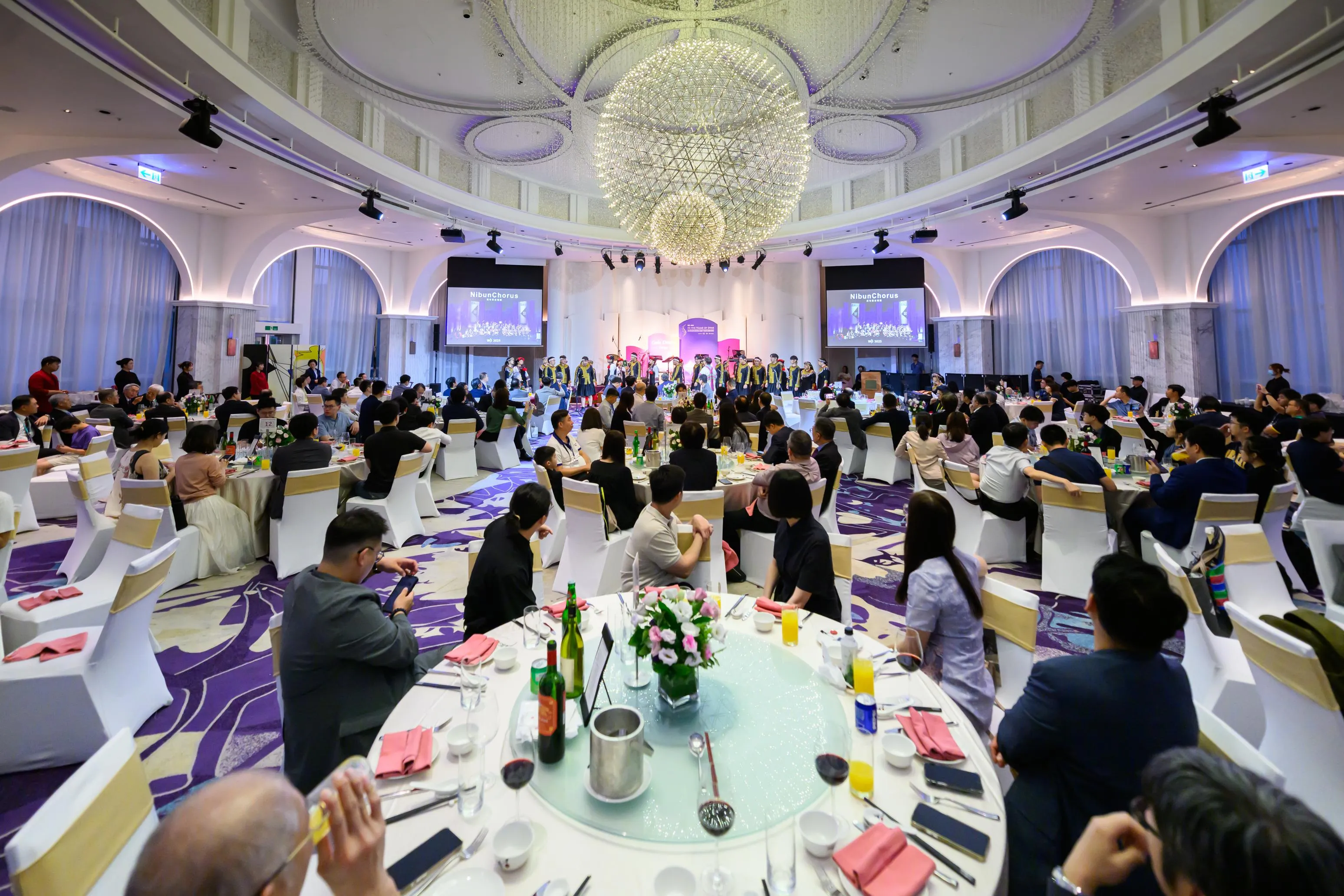
The Asia Conference on Earthquake Engineering (ACEE) was initiated by the Association of Structural Engineers of the Philippines, Inc. (ASEP) in 2004 to provide a forum for experts, scholars, and practitioners to exchange academic research and technical expertise. In November 2022, the 8th edition (8ACEE) was held in Taiwan with the theme " Earthquake-Resilient and Sustainable Communities." The event brought together 220 elite participants from 19 countries to explore innovative applications in disaster management and mitigation, successfully fostering international knowledge sharing.
Due to the impact of COVID-19, the conference was eventually held as a Hybrid Meeting. Asia Concentrate Corporation was appointed in the later stages of preparation to handle the promotional design and venue branding. Delivering an efficient execution plan within a very limited timeframe became the primary challenge of this project.
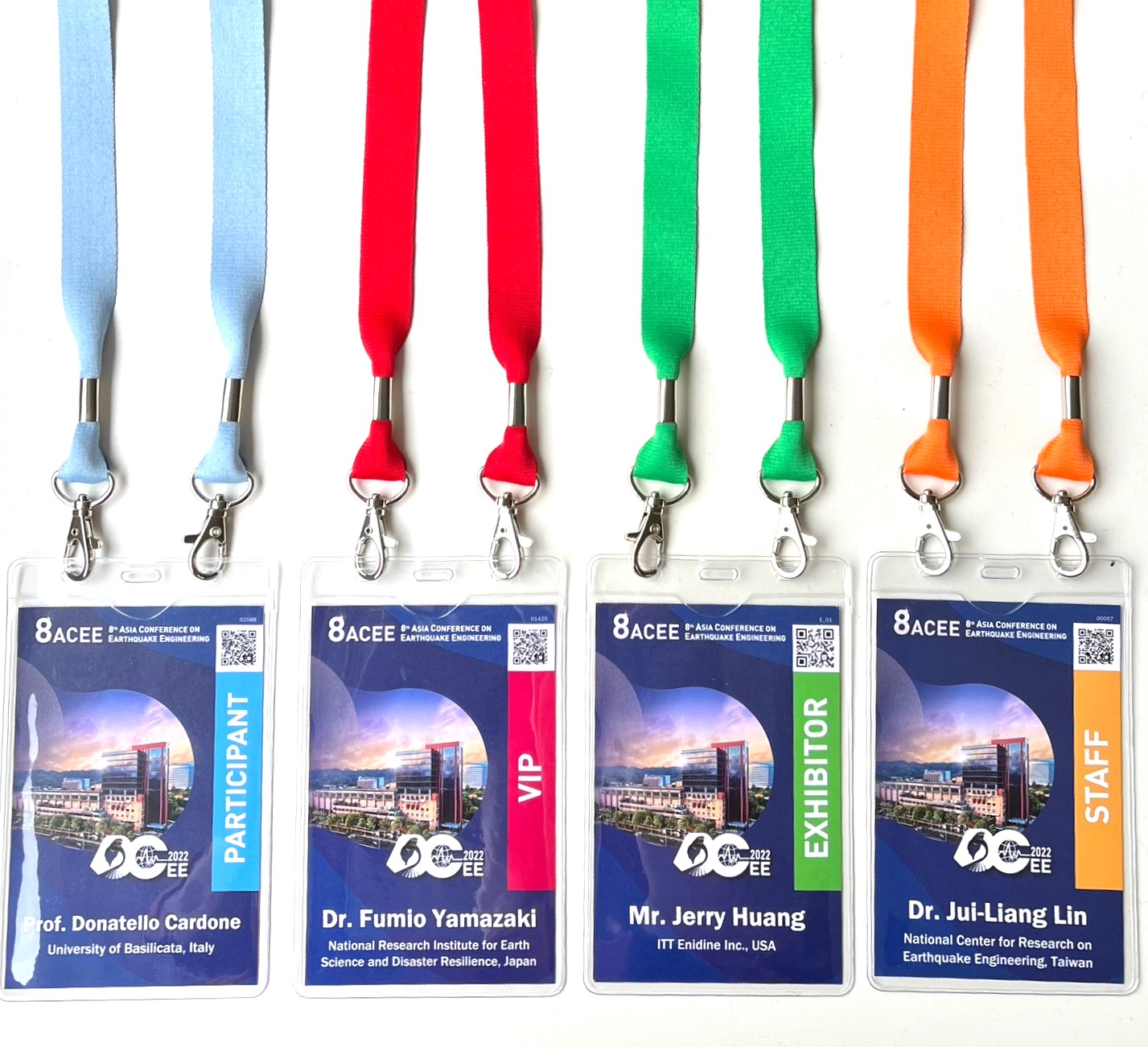
First, for the visual identity extension, we analyzed and categorized the key visual elements to create a systematic design framework. Adapting to the specific functions and layouts of various materials, we flexibly applied the organizers' key visuals. This ensured that participant badges for different categories and the branding for five separate meeting rooms were clearly distinguished by color coding, while maintaining a consistent visual identity through shared core elements.
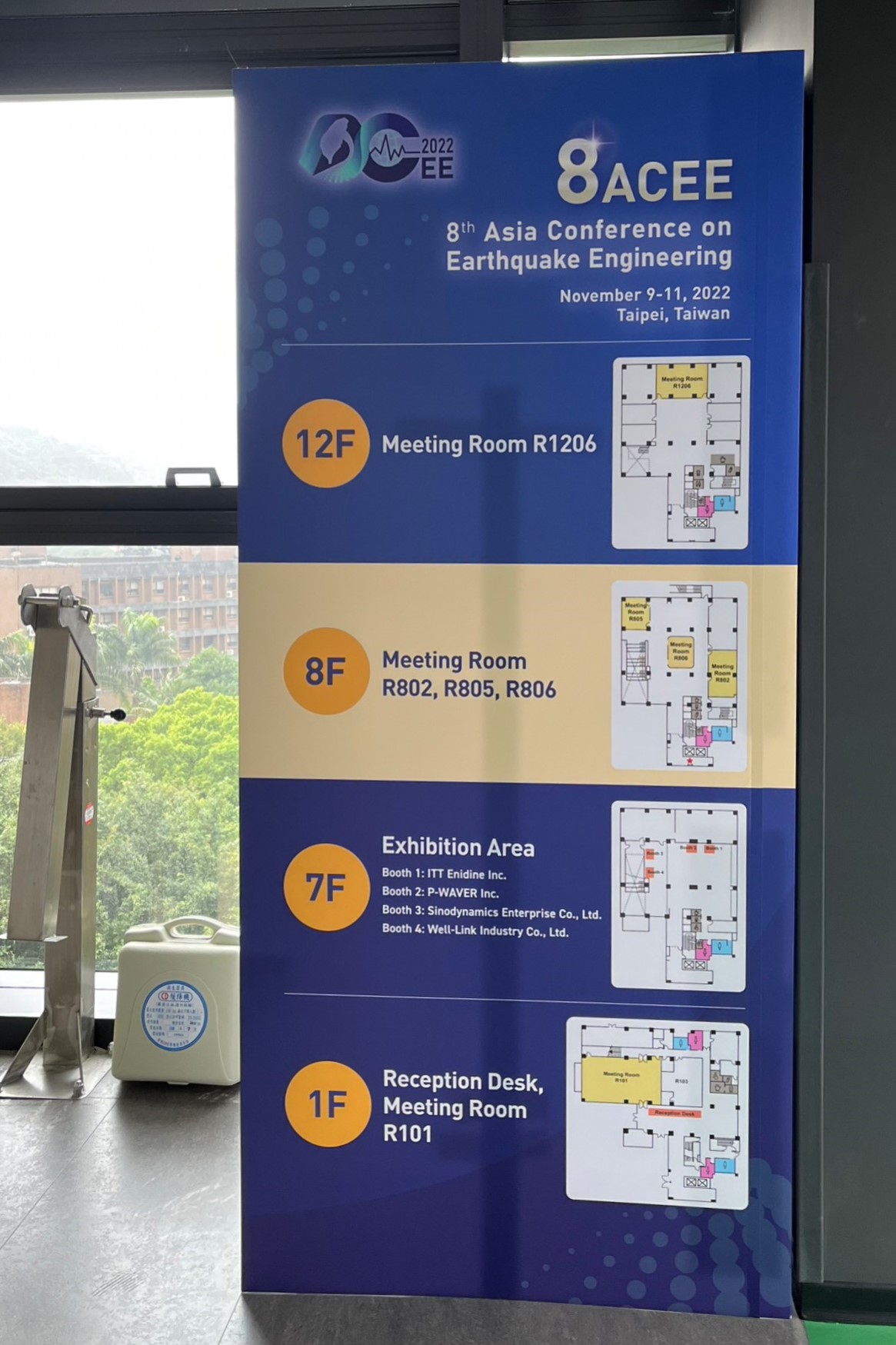
Second, for venue planning, the core of our strategy was the integration of "flow" and "line of sight." Given that the event spanned four floors with multiple parallel sessions in the program, we conducted an on-site survey to clarify the best routes. We installed clear floor maps at every elevator exit and deliberately flipped the architectural floor plans to match the participants' perspective. This allowed guests to intuitively understand the room layout the moment they stepped out of the elevator. Combined with color-coded program posters, participants could quickly identify directions and reach their sessions without confusion. At the same time, following our commitment to sustainability, we received approval from the organizer to post the program schedules directly onto the glass partitions of the meeting rooms. This approach replaced traditional disposable stands, significantly reducing material waste as well as transportation and labor costs.
Through the deep integration of visual systems, flow planning, and venue resources, this project successfully achieved the consistency and harmony essential to conference design. Design and planning are ultimately about serving "people." This people-centric approach to solving venue challenges is the true practical realization of our strategic planning expertise.


.webp)

.JPG)


