From the ICCA Congress to Meeting Design: Reimagining the Starting Point of Conferences
The ICCA (International Congress and Convention Association) Congress is regarded as one of the most important annual gatherings in the global meetings industry. For those of us working as PCOs (Professional Conference Organisers), it is more than a platform for business connections - it is a live stage to observe how international conferences are designed, experienced, and reimagined.
In 2014, at the 53rd ICCA Congress held in Antalya, Turkey, I had my first realisation of how Meeting Design can redefine the starting point of a conference and more. I still remember the morning of 3 November, 9 o’clock sharp. I was there, in Antalya, a Turkish seaside resort, still adjusting to the time difference. The lights dimmed in the conference hall. No music, no slides - but instead the sound of birds in the dark. It felt both real and unfamiliar.
Gradually, a story began to unfold. A soft voice spoke, as if to gently wake us - not to wake up for a presentation, but to wake up to being present in that moment. As the lights slowly went up and the story developed, I saw Eric de Groot, not on the main stage, but standing on a table in the middle of the room.
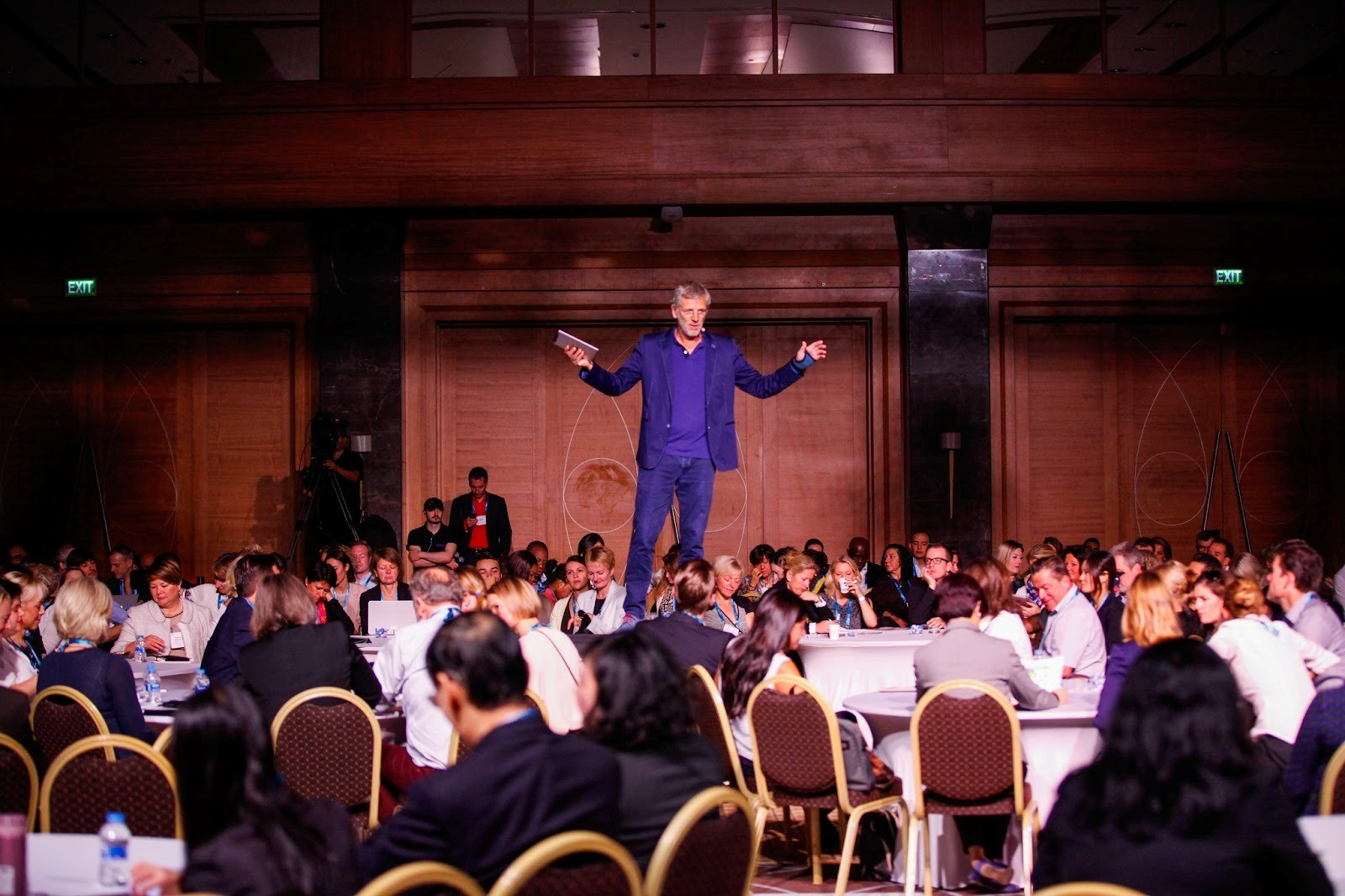
A voice in my head whispered: So, conferences can actually look like this. At the ICCA Congress, I experienced for the first time that conferences could take on entirely new forms.
For PCOs, ICCA counts as one of the most authoritative organisations globally. Its members come from over 90 countries, including government bodies, CVBs, private companies, PCOs, venue providers, and educational institutions. Every year, thousands of people working with meetings gather in different cities to exchange information (through Business Exchange sessions), build friendships and trust, and help shape the direction of the events industry through the congress and various workshops. For those of us in the meetings industry, ICCA represents the shared language of international conferences.
ICCA also releases the ICCA Annual Country & City Rankings, a benchmark for the distribution of international association conferences, based on strict criteria: conferences must be organised by an international association, held in at least three different countries successively, and attract a minimum of 50 participants. For the industry, these rankings are authoritative indicators of a city’s or country’s visibility and competitiveness as an international conference destination. Those studying for the MEET TAIWAN certification will often encounter ICCA’s definition of international association meetings.
That year, the programme also featured a session where attendees explored the evolving skills and perspectives of conference professionals through the lens of different generations. The organisers paired university students with experienced professionals from around the world, inviting small-group discussions on the question: “How would young people do it?” I was in my early thirties and considered “young” myself, but in those conversations, I saw that their worldview was genuinely different. The world keeps moving forward, and so should our imagination as PCOs.
Honestly, before Antalya, my understanding of international conferences was very logistics-driven. It wasn’t until that Monday wake-up call session that I realised the true power of a conference lies in a thoughtfully designed experience.
For it was also at this ICCA Congress that I first encountered Meeting Design, in the persons of two Dutch meeting designers: Mike van der Vijver and Eric de Groot. Back in Taiwan, I immediately bought their book Into the Heart of Meetings. Many feelings I couldn’t express at the time were written clearly in that book - because the design behind all their sessions in Antalya was fully intentional.
For me, Meeting Design is not a “new service”; it is a way of seeing conferences differently. Doing the basics well as a PCO is the international standard, but stopping there would be a missed opportunity. Conferences can help people understand content better, truly change behaviour, and even influence the direction of an organisation.
Over the past decade, we have pursued innovation while challenging ourselves to break out of familiar routines. By staying connected internationally, observing, learning, and questioning what we once took for granted, ICCA taught me more than how to run big conferences - it taught me how to reimagine why people come together in the first place.
Next time, I hope to share our first experience at IMEX Frankfurt as well - a story about the world, choices, and the team we aspire to be. Some journeys change you forever; Antalya was a new starting point for me.

.jpg)